Friday Floriography: Rudbeckia
The Rudbeckia and the Language of Justice
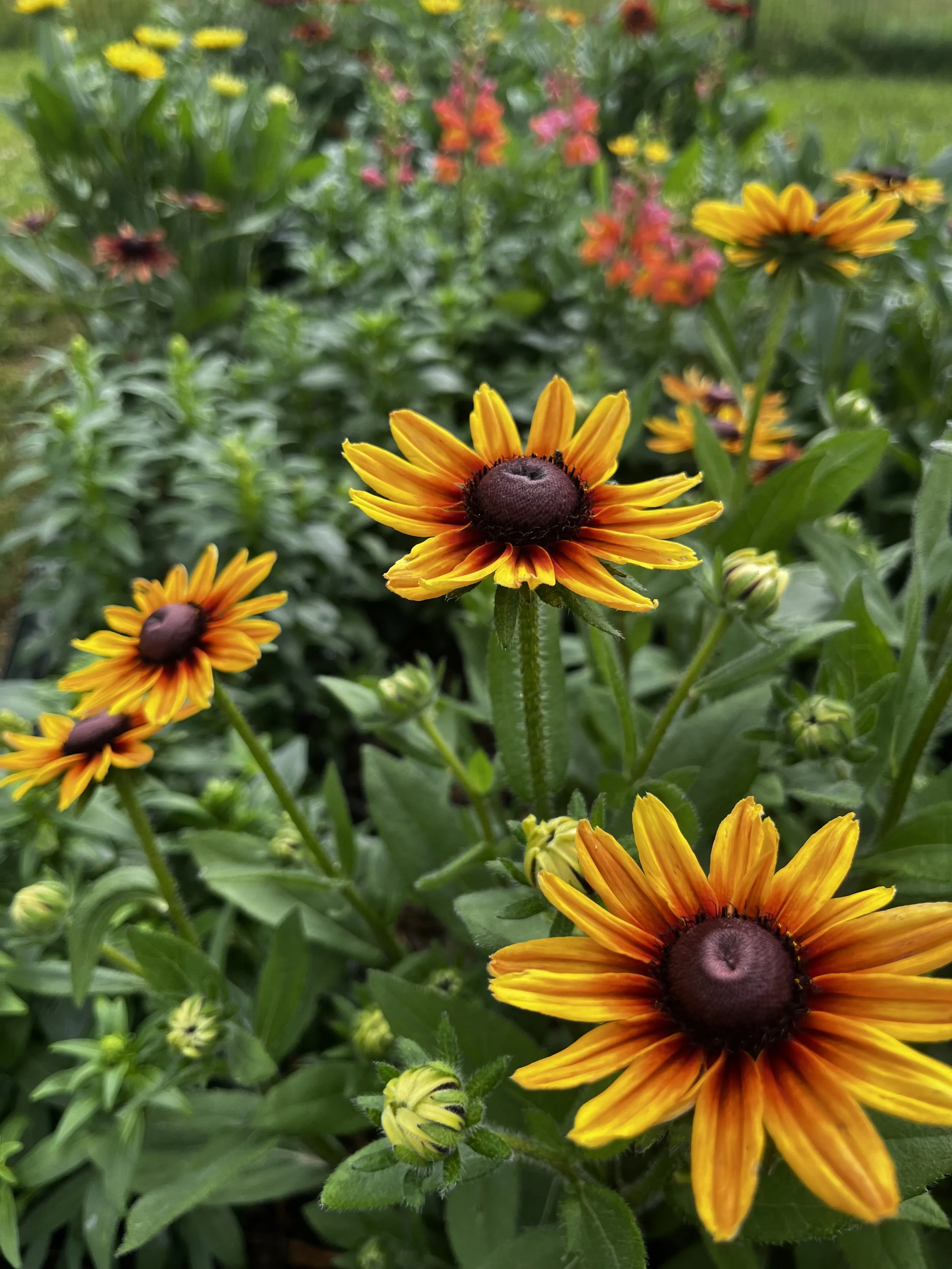
This year I'm growing three different Rudbeckia varieties in the cutting field — Irish Eyes, Sahara, and Triloba — and just beyond the fence line, the wild black-eyed Susans are doing their own thing entirely, unbothered by any of the breeding that went into their cousins. It's a nice reminder that this whole genus started as a prairie wildflower long before anyone thought to refine it.
What Rudbeckia Says
In floriography, Rudbeckia — commonly known as black-eyed Susan — stands for justice. It's an older, more formal meaning than most of what gets attached to garden flowers, tied less to romance and more to fairness, honesty, and doing right by someone. Some later, softer readings added encouragement and motivation to its meaning, which tracks with a flower that grows this readily in poor soil and hard conditions and blooms anyway.
Given to someone, it wasn't a flower about how you felt. It was closer to a statement about how you intended to act.
Where Rudbeckia Comes From
Rudbeckia is native to North America, where it grew as a prairie and meadow wildflower long before European settlement. The genus was named by Carl Linnaeus himself, in honor of his mentor and predecessor at Uppsala University, the Swedish botanist Olaus Rudbeck — a way of paying tribute to the man who had taught and supported him.
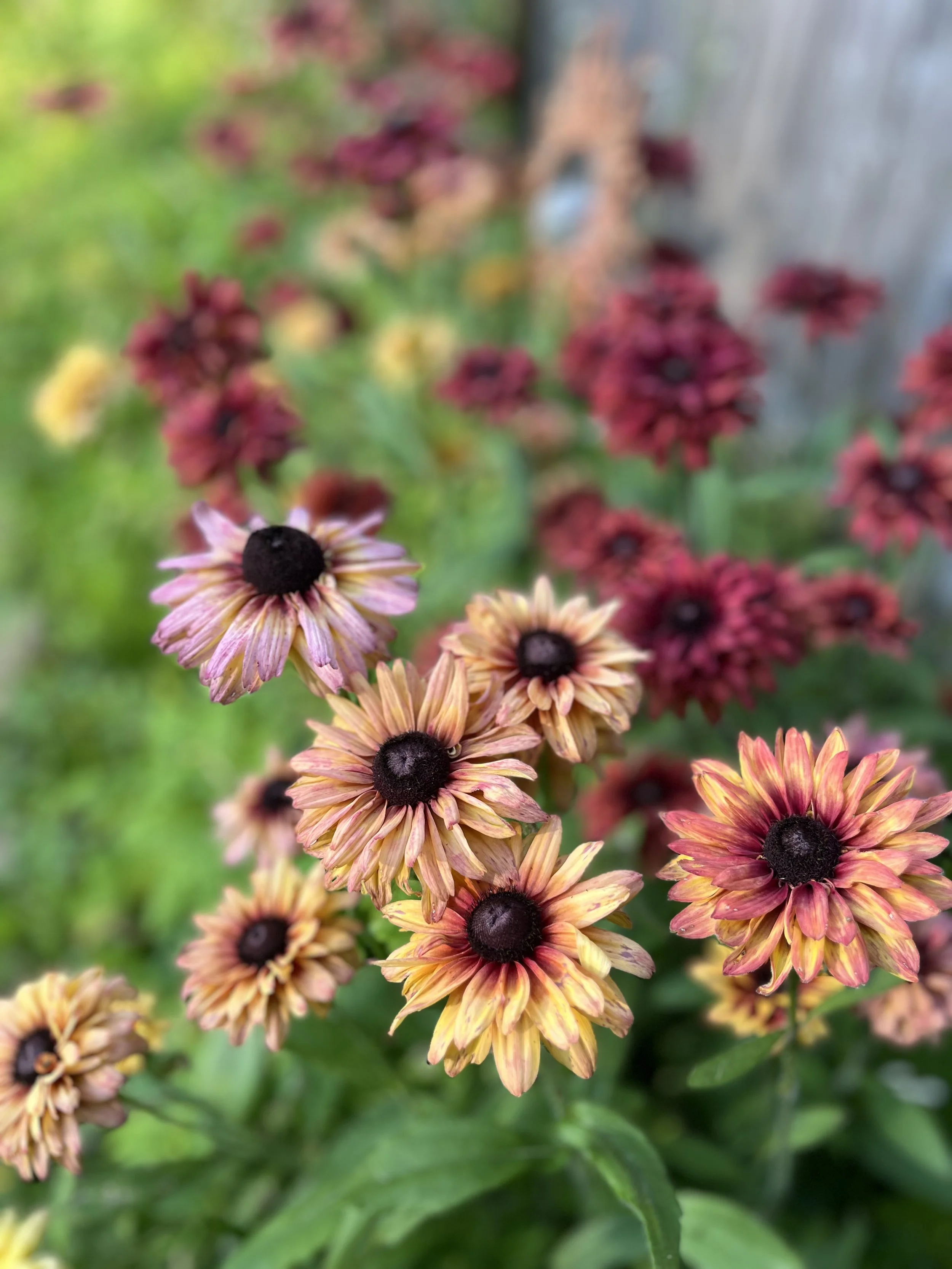
The species most people picture — the true black-eyed Susan, Rudbeckia hirta — is the same one still growing wild in the fields around the farm. Everything else, from the green-centered Irish Eyes to the smoky, autumnal tones of Sahara, is the result of breeders taking that same tough prairie plant and pushing its color range in new directions without changing what made it resilient in the first place.
The Folk Magic of Rudbeckia
Black-eyed Susan doesn't carry heavy European folklore, since it wasn't part of that garden tradition until relatively recently — but it has a long history in Native American herbal practice, where various species in the genus were used medicinally for colds, wounds, and swelling. That practical, healing association fits neatly alongside its floriography meaning of justice: a plant valued for setting things right, whether that meant a body or a wrong.
It also carries a quieter kind of folklore just by being what it is — a flower that thrives in disturbed, difficult ground where little else takes hold. There's an old habit among gardeners of reading that kind of toughness as a small omen of resilience, whatever's growing around it.
Rudbeckia in the Field & Bouquets
Between the three cultivated varieties and the wild ones at the field edge, this is a flower I can talk about at length:
Irish Eyes trades the classic dark brown center for a green one, which gives a bouquet a slightly cooler, more modern look next to warmer companions.
Sahara leans into muted rust, copper, dusty-rose tones, even burgundy instead of the classic gold — my pick for anyone wanting a fall palette that isn't just orange and yellow.
Triloba has small flower heads that bloom in great clouds that make any bouquet sparkle and give airy movement.
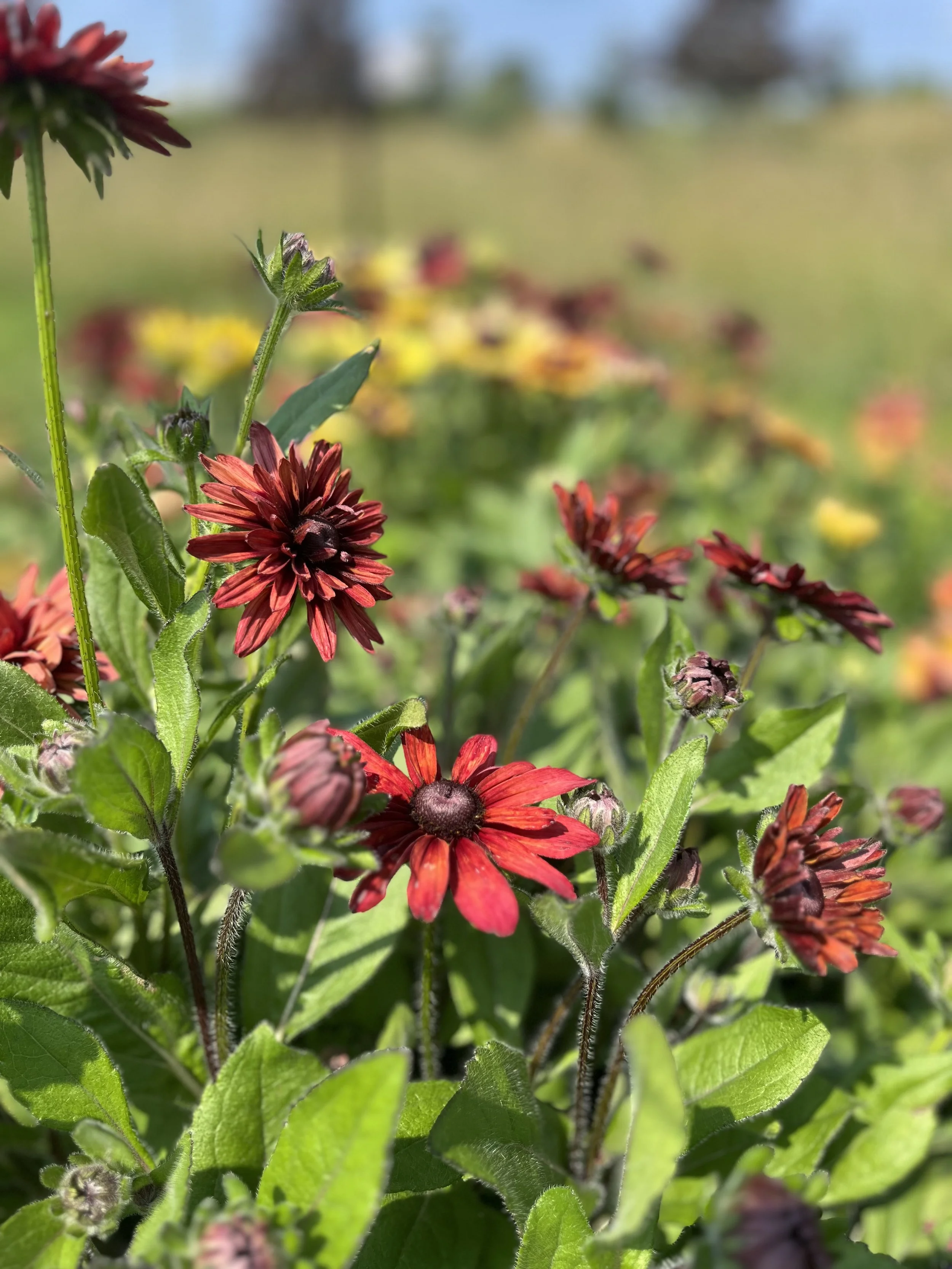
The wild ones along the field edges are smaller and scrappier than any of the cultivated types, but they hold up just as well in a jar and cost nothing but the walk to go cut them.
Rudbeckia tends to get powdery mildew towards the end of the season. Baking soda spray or milk spray are organic options to help prevent it. I often see powdery mildew as a sign of the seasons changing.
Across all of them, Rudbeckia has a genuinely good vase life — expect 7 to 10 days with clean water — which makes it one of the more forgiving flowers to bring home this time of year.
Make sure to do the “wiggle” test when harvesting Rudbeckia. Grab lower on the stem and give it a shake; if the stem is firm and the head doesn’t move, it’s ready for harvest. If the head is wobbly and shakes from side to side, it’s too early to cut and will wilt in the vase. Happy Harvesting!
Misty Meadows Flower Farm is a woman-owned, sustainably grown u-pick cut flower farm in Franklin, NY. U-pick is open July - October, 10 am - sunset.