The Solidago and Encouragement
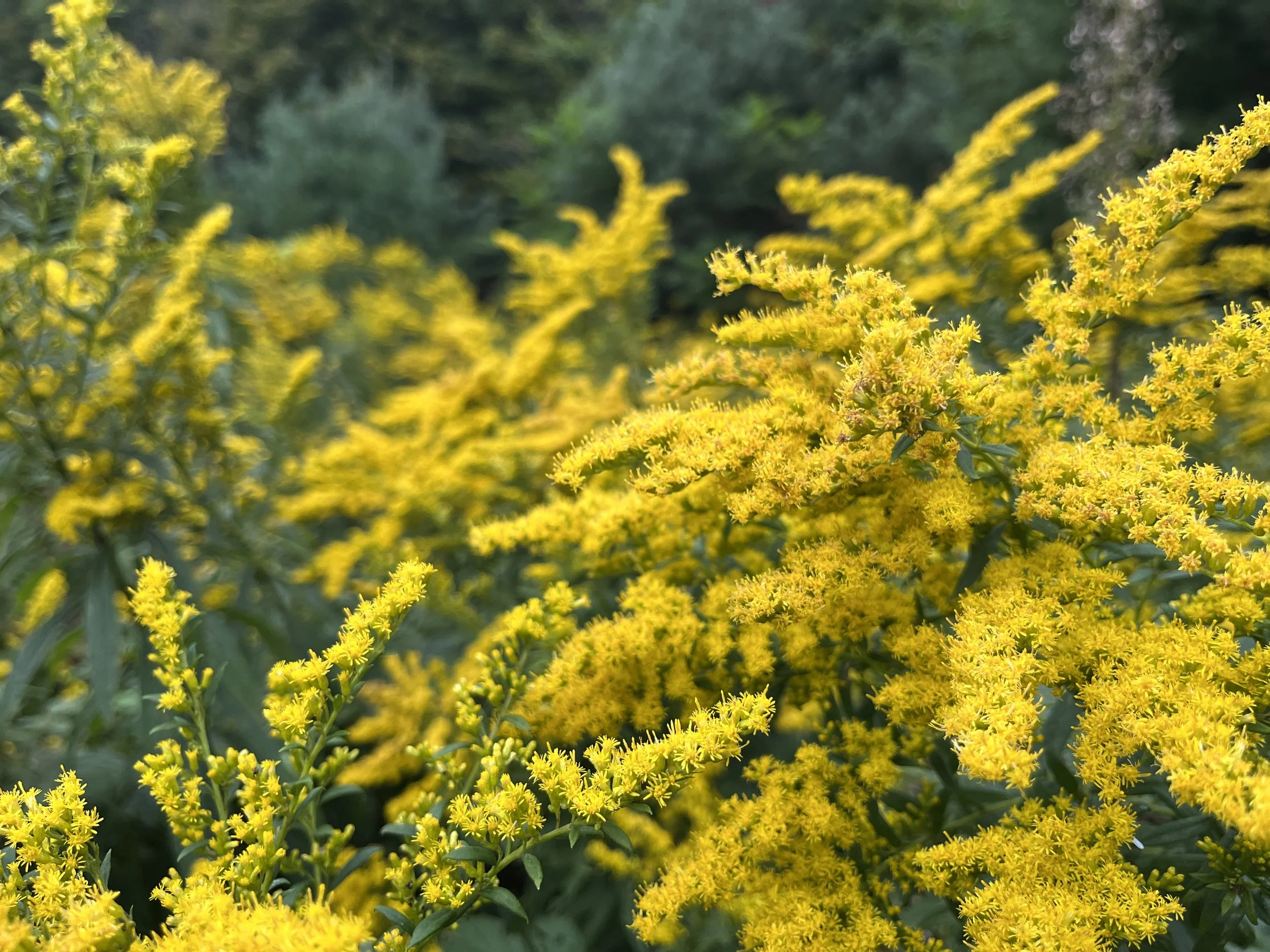
Goldenrod gets blamed for a lot of sneezing it didn't cause. It blooms at the same time as ragweed, it's bright yellow and impossible to miss, and so it takes the fall. Underneath the bad reputation is one of the most useful, resilient, and quietly lucky plants in the American landscape, and it's the last real color standing in the fields before winter. When it’s green, it makes a great foliage; when yellow, it adds a bright pop of color in bouquets.
What the Solidago Says
In floriography, solidago, better known as goldenrod, stands for encouragement and good fortune. Some Victorian flower dictionaries also list it as a flower of precaution, a sign to be careful and keep your wits about you. The two meanings fit together better than they first appear: goldenrod blooms late, when the season is running out, and it's a reminder to keep going and to prepare for what's coming.
Given to someone, it was a quiet "keep going." It wasn't a romantic flower. It was the kind you'd hand to a friend who needed to hear that things were going to turn out all right.
Where Solidago Comes From
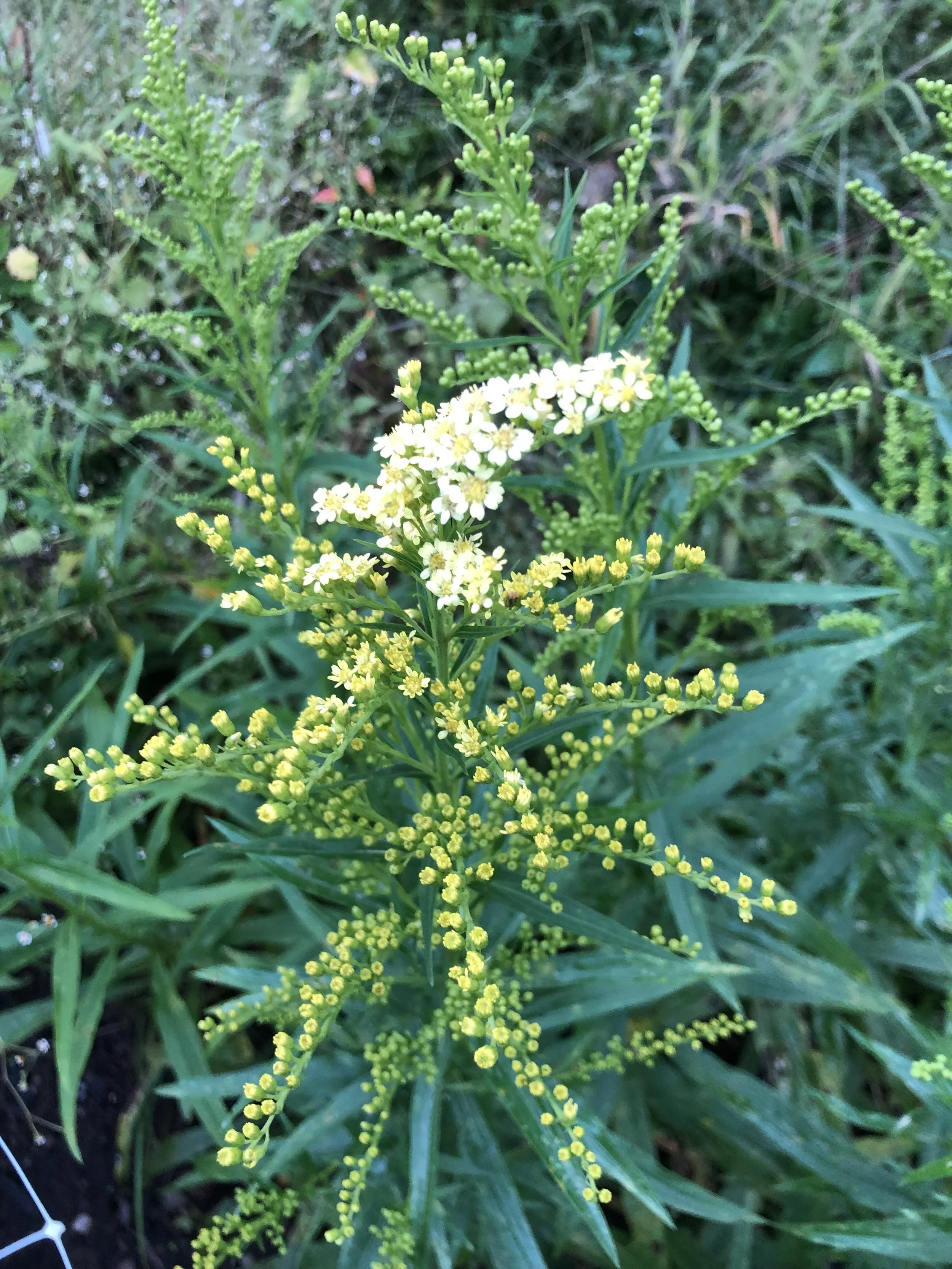
The genus name comes from the Latin solidare, meaning "to make whole" or "to heal." Goldenrod was used as a wound herb in European folk medicine long before anyone thought of it as ornamental, and the name stuck. There are well over a hundred species, and the vast majority are native to North America. Only a single species, Solidago virgaurea, is native to Europe, which is part of why goldenrod became such an American symbol. It's the state flower of both Kentucky and Nebraska.
It also has one of the odder footnotes in plant history: in the 1920s and 1930s, Thomas Edison worked with Henry Ford and Harvey Firestone to breed a goldenrod with enough latex in its leaves to produce domestic rubber. The project didn't go commercial, but Edison did develop a strain that was far richer in rubber than the wild plant.
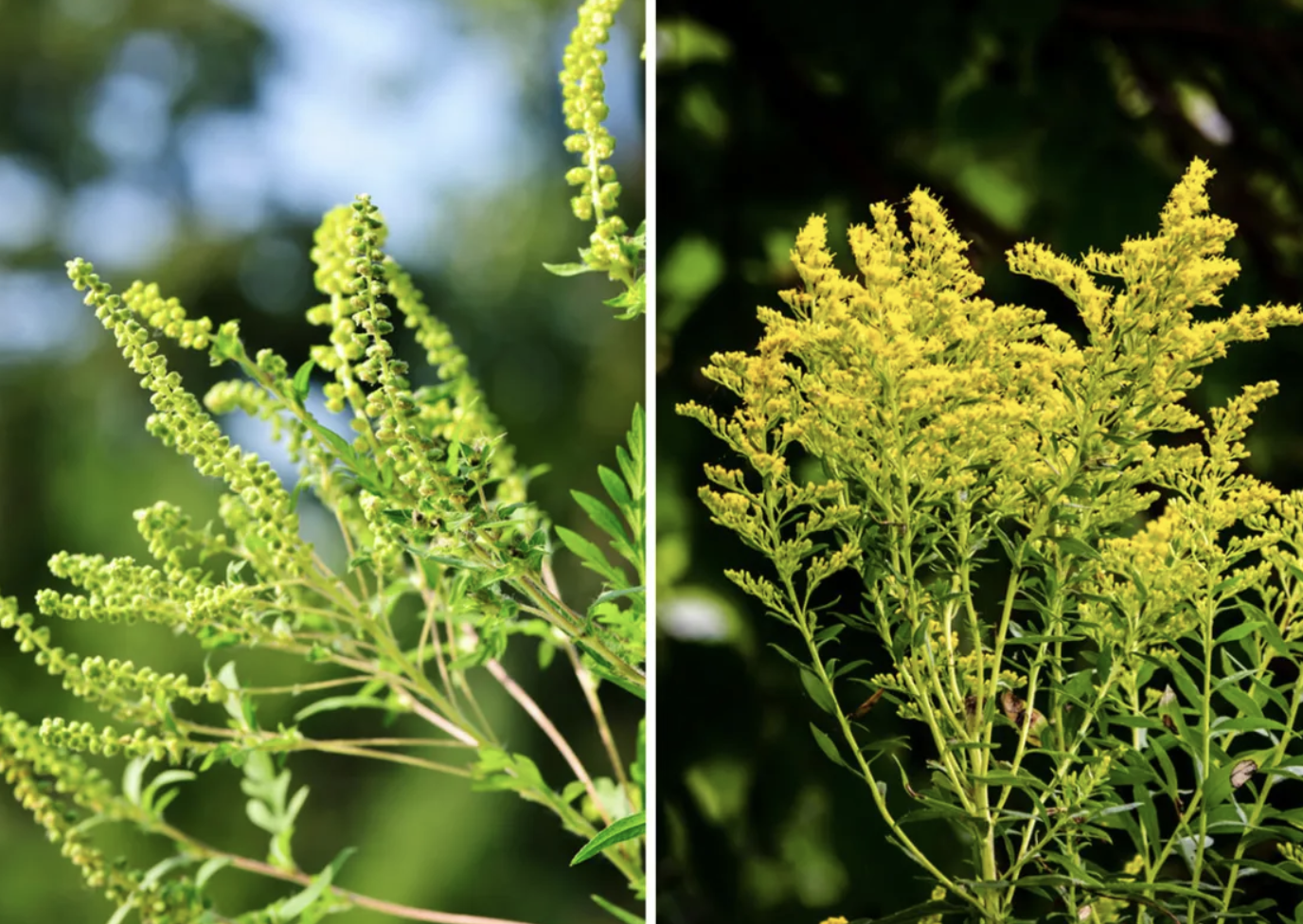
And about the sneezing: goldenrod (right) pollen is heavy and sticky, built to be carried from flower to flower by insects, not drifting through the air. Ragweed, left, which is wind-pollinated and blooms at the same time, is the real culprit.
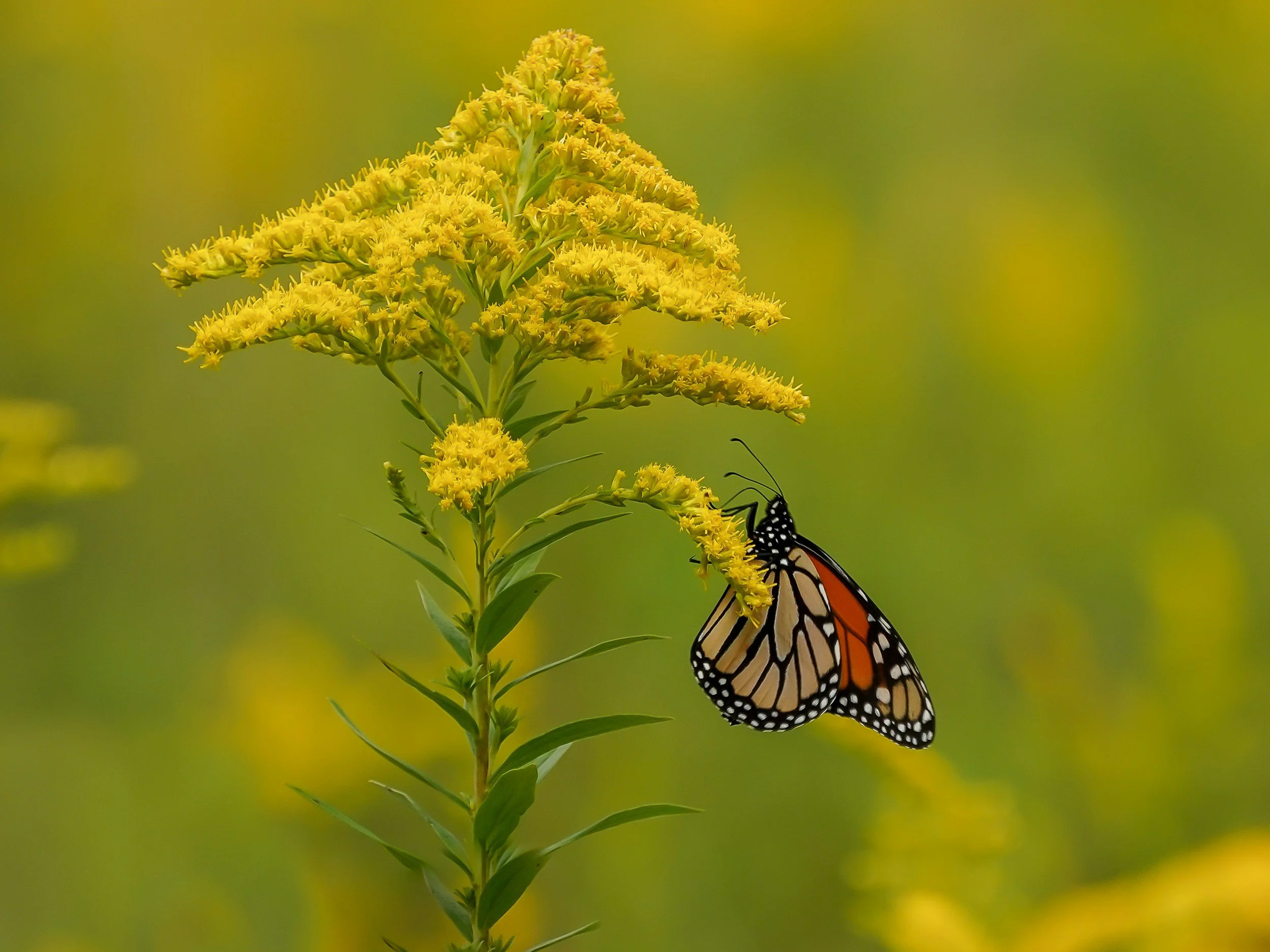
It's also one of the last major sources of nectar and pollen for bees before winter, and migrating monarchs refuel on goldenrod on their way south. A stand left standing at the edge of a field is an important staple through the rest of the season.
The Folk Magic of the Solidago
Folklore around goldenrod runs toward luck and money. One old belief says that if goldenrod springs up by your door without being planted, good fortune is on its way to the household. Another says that a sprig carried in your pocket will lead you to treasure, and goldenrod was used as a dowsing plant for exactly that reason, held like a divining rod to point toward hidden water or something of value. Both traditions line up with the flower's floriography meaning of good fortune.
It also has a practical place in the folk tradition. Goldenrod tea was a common drink in colonial America, and the leaves and flowers were used as a folk remedy for everything from sore throats to wounds, which ties back to the Latin name.
I make an easy goldenrod oxymel every fall. An oxymel is a sweetly simple formula: vinegar, honey, and herbs.
Ingredients:
leaves and flowers of 1 small bouquet goldenrod, about 1/2 cup loosely packed
1/2 cup raw local honey (more or less depending on your sweet tooth)
1/2 cup raw organic apple cider vinegar (adjust more or less depending on ratio of honey)
Solidago in the Field & Bouquets
Goldenrod is an underrated cut flower, and a few tips make it much easier to work with:
Cut when about half to three-quarters of the florets are open. Cut too early, and the plumes can stall; cut too late, and they start to shed.
Strip the leaves below the waterline. Goldenrod foliage goes slimy quickly in water, so this does more for vase life than almost anything else.
Expect 7 to 10 days in the vase, sometimes longer with clean water.
It dries beautifully. Hang small bunches upside down in a dry, dark space, and the plumes hold their gold for months. Cutting them when they're mostly open gives the best color.
It pairs well with the rest of fall. The upright, feathery plume adds a different texture next to round blooms like zinnias, sunflowers, and scabiosa.
Misty Meadows Flower Farm is a woman-owned, sustainably grown u-pick cut flower farm in Franklin, NY. U-Pick is CLOSED for the season.