Friday Floriography: Amaranth
Amaranth and the Language of Immortality
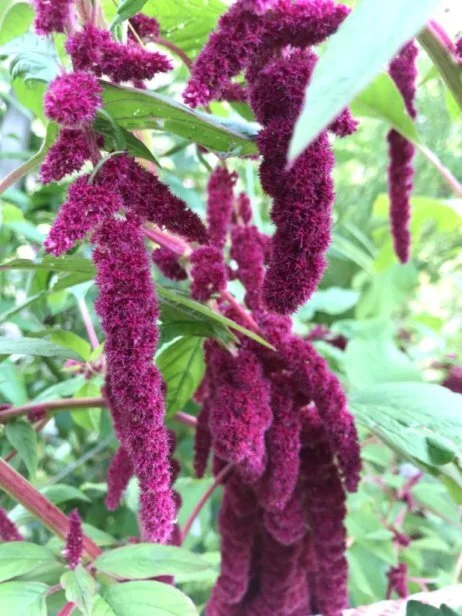
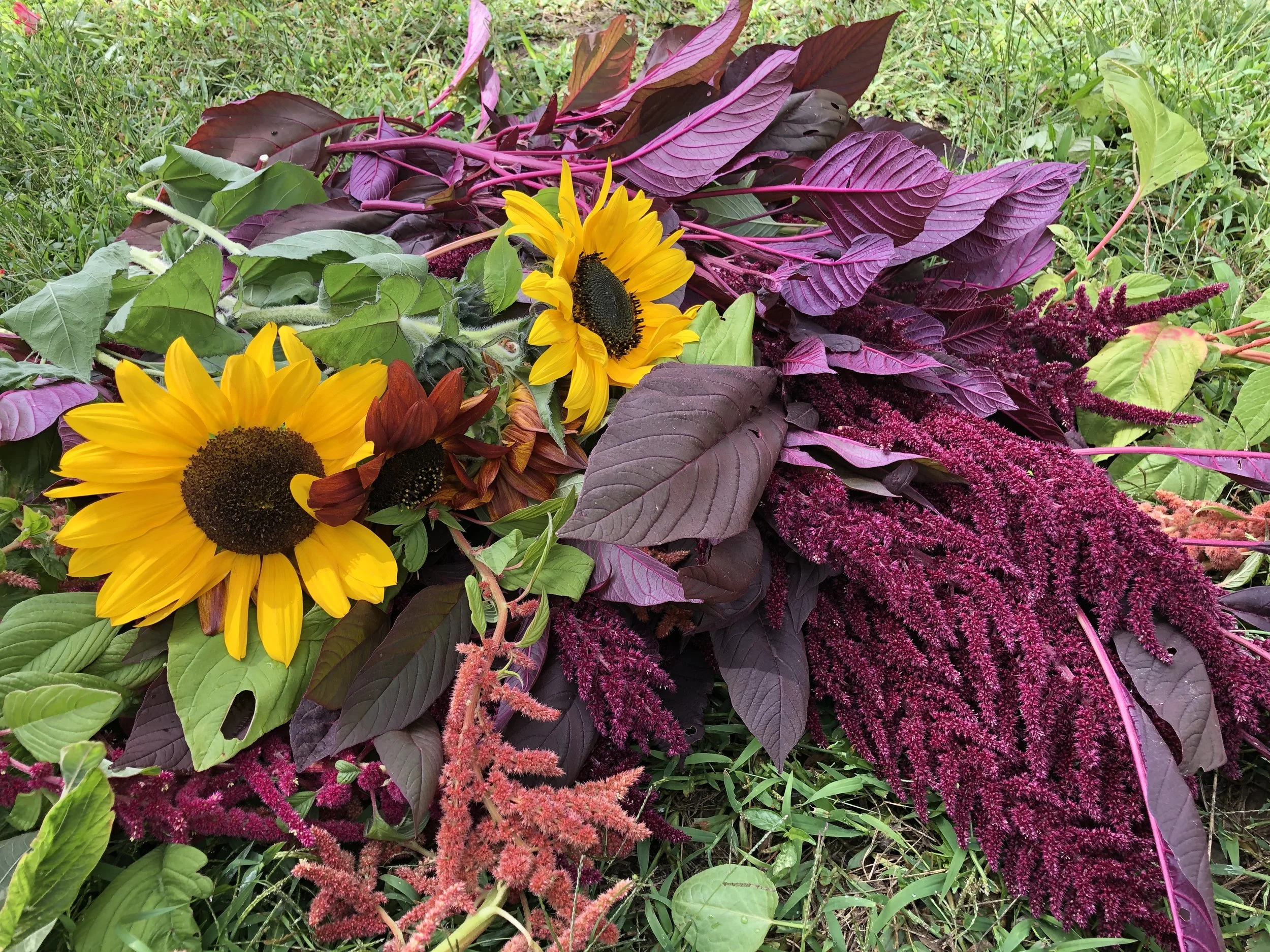
Amaranth is one of the strangest-looking things I grow — long, trailing tassels or upright, velvety spikes, depending on the variety — and it's also one of the longest-lasting, both in the field and long after it's been cut. That staying power turns out to be the entire point of the flower.
What Amaranth Says
In floriography, amaranth stands for immortality and unfading love. It's one of the more literal symbolic matches in the whole language of flowers — the plant was named for exactly the quality it represents, and the meaning has barely shifted since.
Given to someone, amaranth wasn't about a feeling in the moment. It was a claim about permanence — a love, or a memory, that wasn't expected to fade the way most things do.
Where Amaranth Comes From
The name comes directly from the Greek amarantos, meaning "unwilting" or "one that does not wither" — a description of how the flower holds its color and form even long after cutting, which is unusually literal for a plant name. Amaranth was cultivated by the Aztec as a staple grain crop, prized for its nutrition and grown widely enough to carry real ceremonial and religious weight, alongside corn and beans as one of the foundation crops of Mesoamerican agriculture.
The Folk Magic of Amaranth
Ancient Greeks used amaranth to decorate graves, acting on the belief that a flower which didn't visibly die was a fitting tribute to someone who, in memory, wasn't supposed to either. That association with grave decoration and lasting remembrance persisted well beyond ancient Greece, and amaranth shows up again and again across different cultures wherever people needed a plant to stand in for something meant to outlast them.
Amaranth in the Field & Bouquets
Amaranth rewards patience more than almost anything else I grow, fresh or dried:
Cut when the tassels or spikes are fully colored. Unlike a lot of flowers, there's no rush — amaranth holds its look well past the point most blooms would be past their peak.
Fresh vase life is excellent — often 10 days or more, among the longest-lasting cut flowers in the field.
It dries beautifully. Hang bunches upside down in a dry, dark space and the color holds for months, which makes it one of the best options if you want a piece of the season to keep well into winter.
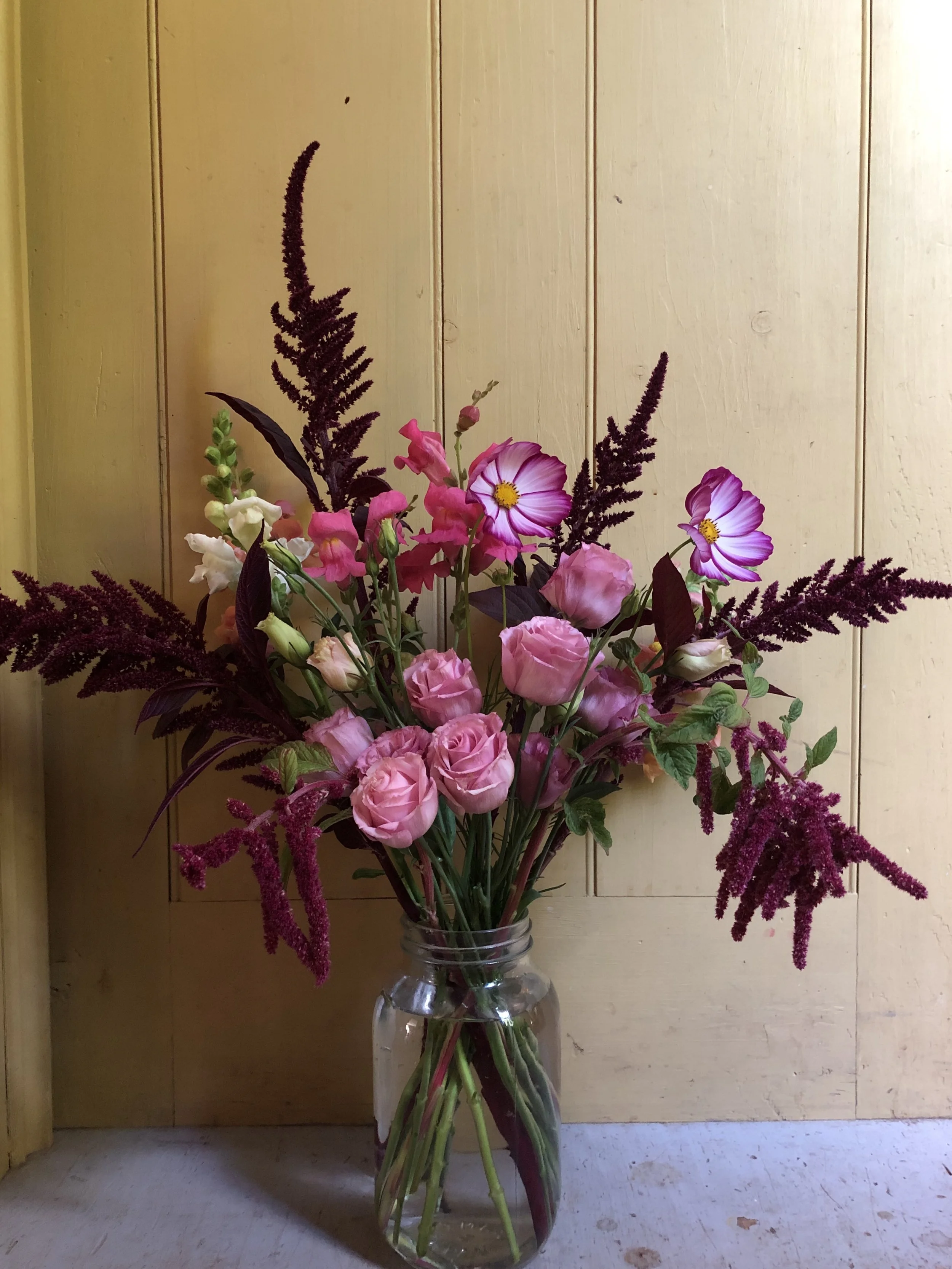
Trailing varieties (love-lies-bleeding) work as a dramatic drape in a bouquet or arrangement, while upright types add strong vertical structure.
Next up: the Snapdragon, and an old kind of protection.
Misty Meadows Flower Farm is a woman-owned, sustainably grown u-pick cut flower farm in Franklin, NY. U-pick is open July - October, 10 am - sunset.